
 Back
BackTuskegee University & The Weight of Institutional Standards
by, Admin
July 28, 2026Somebody’s cousin is showing up to Tuskegee with a bonnet in their bag.
That’s what set this off. Ahead of the upcoming school year, Tuskegee President Dr. Mark A. Brown sent a letter to parents laying out new campus standards: no do-rags, bonnets, bedroom shoes, or pajamas in classrooms, dining halls, or official university functions. Add in tighter cell phone restrictions and monitored attendance, and social media predictably exploded. Black Twitter, Threads, and HBCU group chats immediately framed this as a binary choice: career discipline versus respectability politics. But both sides are missing the nuanced middle and the data that actually settles part of the argument.
Beyond the Group Chat Outrage
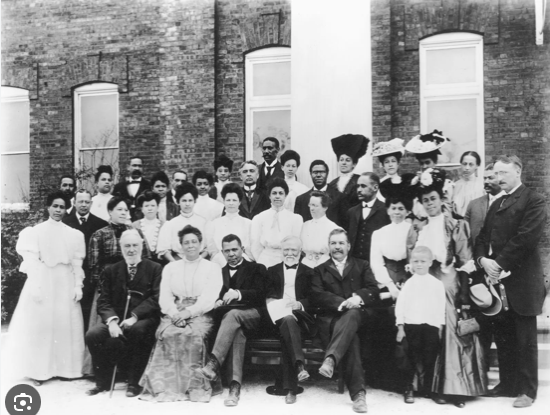
Tuskegee always had dress codes in place heading into commencement and formal events. What changed is the reach. Naming hair protection explicitly and extending restrictions into daily functional spaces, like dining halls, moves the goalposts. President Brown framed the move around workforce preparation for Tuskegee’s largest incoming class in 32 years, part of what he is calling the university’s “Renaissance Era” new PhD programs, a new online campus, new athletics, and now, tighter standards. Historically, the framing lines up with the legacy of alumni like Ralph Ellison, remembered by classmates for his sharp presentation. It also follows a long line of HBCU dress code fights: Hampton’s campus-wide ban on do-rags and bandanas, enforced with ID confiscation; Morehouse’s 2009 “Appropriate Attire Policy,” which banned do-rags and grills and drew national backlash, partly because it also targeted how gay and gender-nonconforming students dressed; Howard’s business school, which still requires suits multiple days a week during orientation. Dillard, by contrast, keeps things looser day to day proof that strict enforcement was never universal, even among schools with equally deep roots in tradition and discipline. Tuskegee chose the stricter lane. That’s a choice, not an inevitability.
The Cafeteria Is not a Boardroom
The online discourse flattens this issue by treating a bonnet or do-rag like a graphic tee. It isn’t fashion; it’s essential hair care how a lot of Black students protect a style overnight or between wash days, not a statement they’re making walking into the dining hall. The issue isn’t requiring business attire for a career fair; it’s regulating how Black students exist in the ordinary, unglamorous parts of campus life. Preparing students for unforgiving corporate spaces and micromanaging them while they grab lunch can happen inside the same policy, but they are not the same thing.
What “Unforgiving” Actually Looks Like
Here’s where the “prepare them for the real world” argument gets complicated: the real world Tuskegee is preparing students for has its own well-documented bias problem, and it isn’t hypothetical. The 2023 CROWN Workplace Research Study, co-commissioned by Dove and LinkedIn, found that Black women’s hair is judged as “unprofessional” at roughly two and a half times the rate of white women’s hair. Nearly two-thirds of Black women say they’ve changed their hair for a job interview, and 41% went from curly to straight to do it. More than one in five Black women aged 25 to 34 report being sent home from work over their hair. Among Black women under 34, a third believe they’ve lost out on a job interview specifically because of how they wore it.
That’s the workforce Tuskegee is telling students to get ready for. And the legal backdrop makes it heavier, not lighter, for a school specifically in Alabama. The case that helped ignite the CROWN Act movement nationally Chastity Jones, a Black woman in Mobile, Alabama, who had a job offer pulled in 2010 after she refused to cut her locs was litigated all the way to the 11th Circuit Court of Appeals, which upheld the employer’s right to reject her over her hairstyle. That ruling still governs Alabama, Florida, and Georgia today. Alabama has not passed its own CROWN Act. A Black student walking off Tuskegee’s campus into an Alabama workplace has less hair-discrimination protection than a student graduating almost anywhere else in the country. So “prepare them for the workforce” is doing real work as an argument that the bias is documented and won’t go away because a campus policy ignores it. It cuts both ways: the workforce Tuskegee is prepping students for already penalizes Black hair without cause, and a policy that restricts protective styles even in the Cafeteria risks teaching students to pre-emptively police themselves in spaces where no employer, recruiter, or client will ever be present.
The Defense Isn’t Nothing
It would be dishonest to leave it there. Alumni and parents largely backed the policy once it went public, and their argument isn’t naive. Brown’s own letter put it directly: employers are less forgiving, and presentation can outweigh preparation no matter how qualified someone is. That’s not a talking point; it’s consistent with what the CROWN data itself shows about how harshly Black professionals get judged on appearance before anyone evaluates their work. Tuskegee has taught presentation alongside preparation since Ellison’s era; this isn’t a break from that tradition, it’s an extension of it, timed to a moment when the university is trying to make a broader case for itself to its biggest incoming class in three decades.
Both things are true at once. The policy is defensible as a workforce-readiness measure. It’s also broader than it needs to be to accomplish that, because it reaches into spaces the dining hall, the ordinary Tuesday afternoon where no version of “the real world” is actually watching.
When Preparation Turns into Micromanagement
A standard connected to a clear purpose serves as preparation. A rule is just a standard that outlived its explanation and relies solely on authority.
The question isn’t whether HBCUs should hold high expectations; most students expect them to. The question is whether those expectations are built with modern students, who are navigating creator economies, remote work, and shifting workplace norms that did not exist when this tradition started, or dictated to them in a letter addressed to their parents.
The Real State of the Yard
This was never really about du-rags. It’s about whether an institution can tell the difference between a standard that’s still doing its job and a rule that’s outlived its explanation, and whether it builds that answer with the students living it, not just for them, addressed over their heads to their parents. Tuskegee has the receipts to make the preparation argument. It also still has the option to draw the line somewhere tighter than the Cafeteria. Those aren’t contradictory positions. They are the actual conversation everyone skipped to get to the group chat.
State of the Yard is an institutional review series by HBCU Shack examining the cultural, operational, and leadership questions shaping the future of Historically Black Colleges and Universities.